What Is the Difference Between Zebra Blinds and Roller Shades?
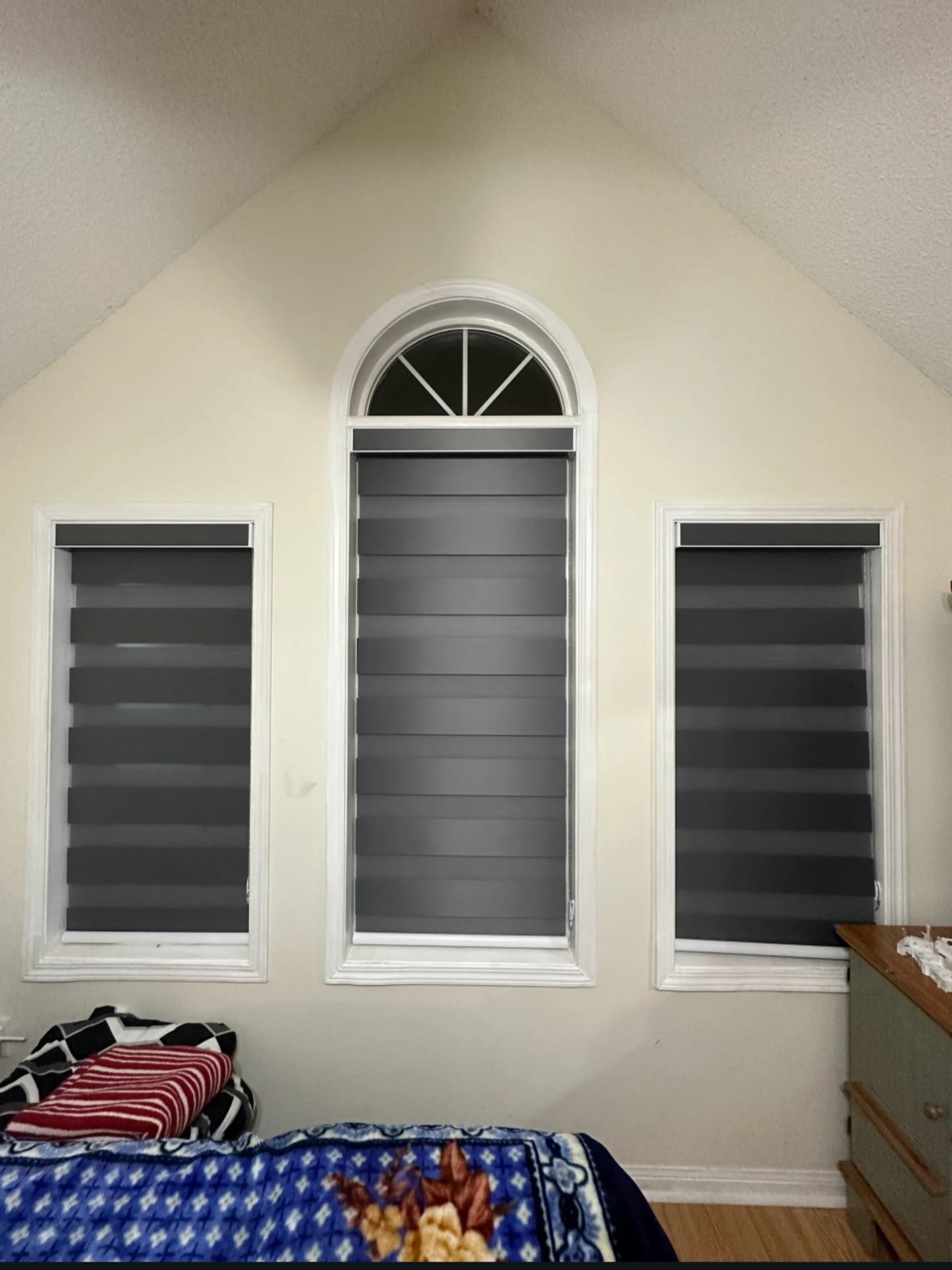
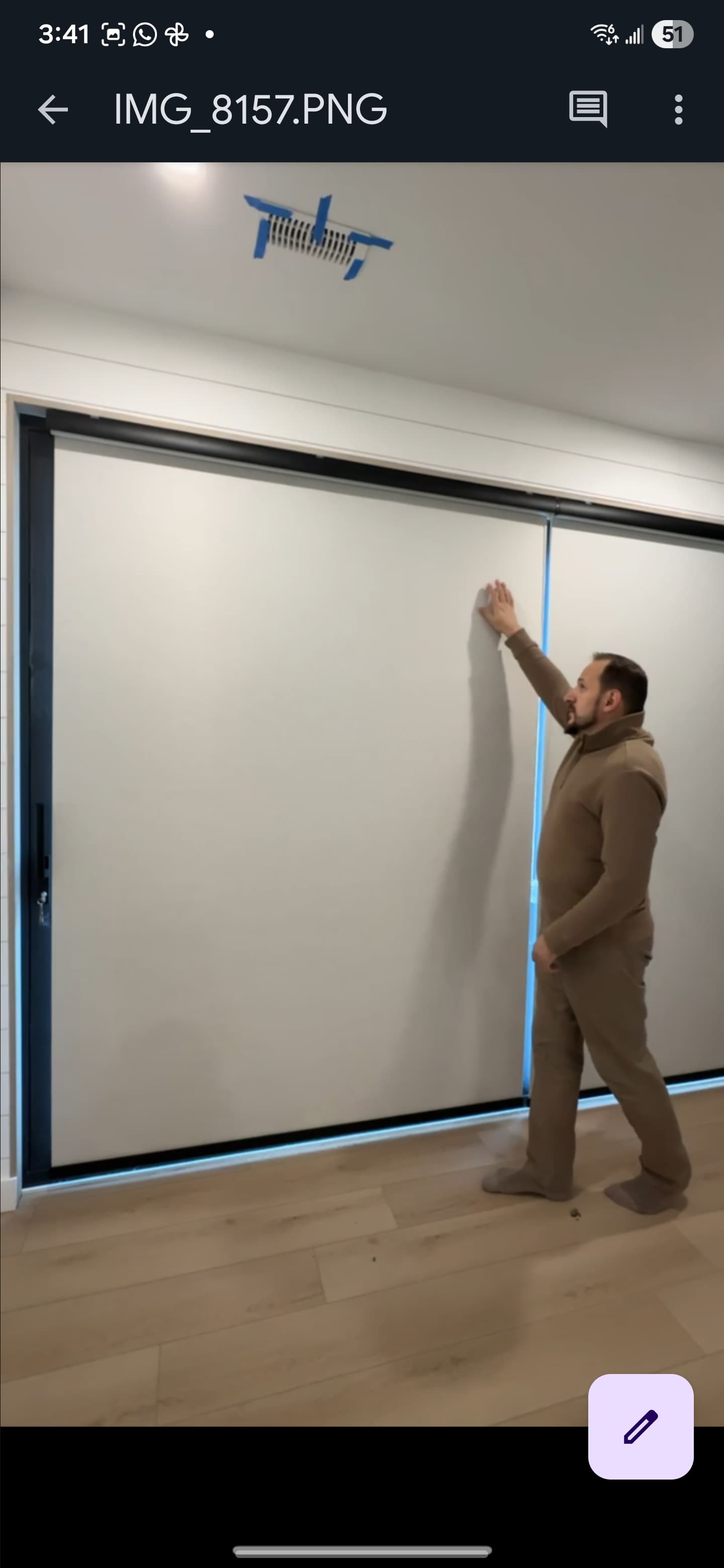
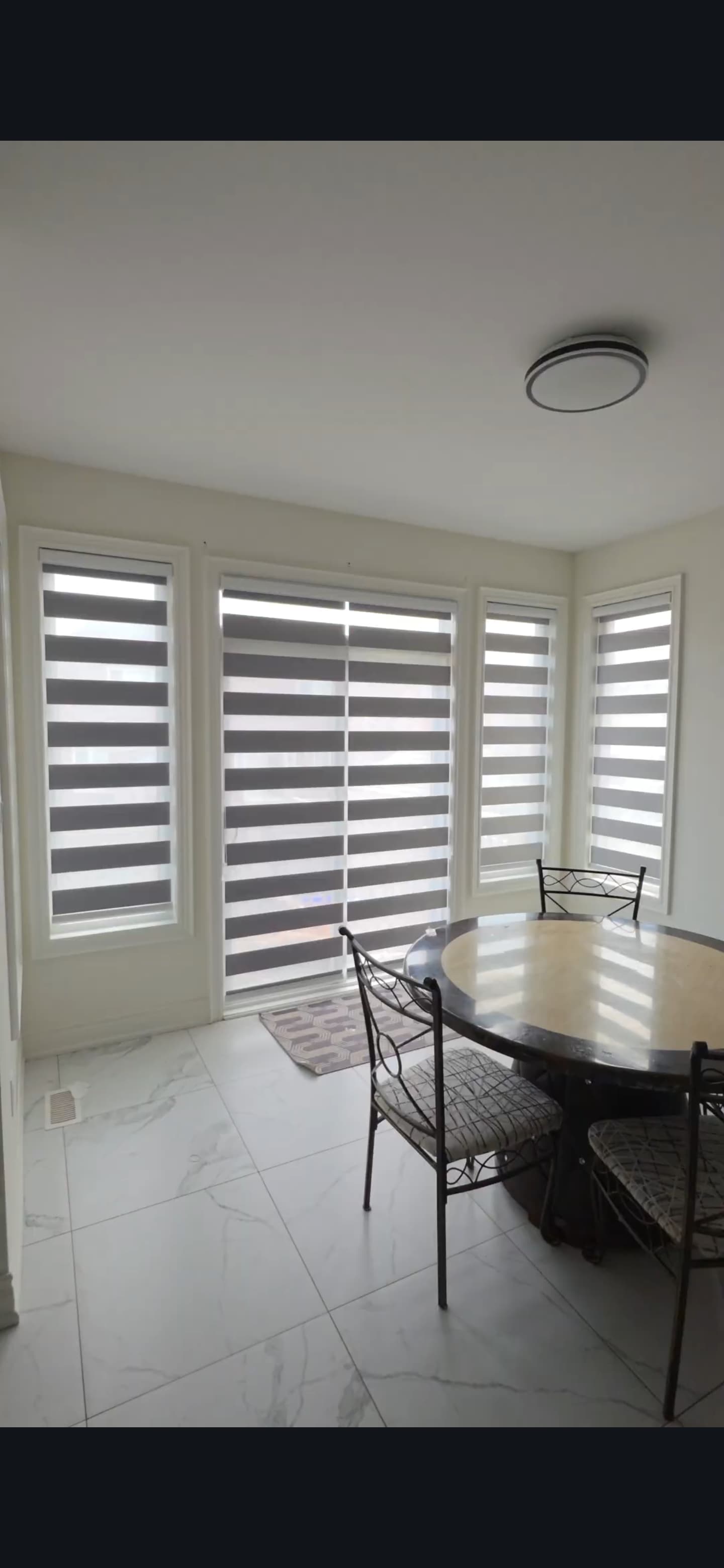
Zebra blinds and roller shades often get compared because they both offer a clean, modern look without bulky slats or heavy drapery. The core difference is how they control light. Zebra blinds use two layers of fabric with alternating sheer and solid bands that slide past each other. When sheer overlaps sheer, you get filtered daylight and a view; when solid overlaps solid, you get more privacy and dimming. Roller shades are a single piece of fabric that rolls up and down. They are either raised for a full view or lowered for privacy, with fewer “in-between” settings than zebra blinds. Both can be custom-made, installed in slim cassettes, and paired with motorization, but zebra blinds excel at fine-tuning daylight while roller shades excel at simplicity and room-darkening when paired with blackout fabrics.
In Toronto condos and modern homes where space is limited, zebra blinds appeal to homeowners who want one product that can act like a sheer and a privacy shade at the same time. Roller shades appeal to those who want the most streamlined look and the strongest blackout capability in bedrooms or media rooms. If you’re exploring either option, you can learn more about our Zebra Blinds collection or see how our custom roller shades perform in different fabrics and cassette styles.
Which Option Offers Better Light Control?
Light control is often the deciding factor between these two products. Zebra blinds let you micro-adjust the fabric alignment so you can block glare while keeping a view. You can stop the blind at any height, then fine-tune the band alignment to hit the perfect balance of brightness and privacy. Roller shades provide light control mainly through fabric selection: a light-filtering fabric will soften sun, a solar fabric will reduce heat and glare while keeping a view, and a blackout fabric will darken the room almost completely. Because roller shades are a single fabric layer, you switch between “up,” “down,” and some intermediate stops—but you don’t get the blended sheer/solid positions that zebra blinds provide.
If you love soft daylight and want to adjust your shades throughout the day without losing your view, zebra blinds usually win. If you prefer a simple “up or down” approach and need strong dimming for naps or presentations, roller shades can be the better fit—especially in blackout or high-opacity solar fabrics.
Are Zebra Blinds or Roller Shades More Stylish for Modern Homes?
Both options are sleek and contemporary, but they present a different design feel. Zebra blinds introduce subtle horizontal bands that add texture and rhythm to a room. When the bands are aligned, they become a design feature that softens edges and adds visual interest without feeling busy. Roller shades are ultra-minimal: when fully raised, they almost disappear into the cassette; when lowered, they create a smooth, uniform backdrop that can be either neutral or boldly coloured depending on the fabric.
In open-concept living rooms and condos, zebra blinds often feel more dynamic because you can shift the bands based on mood and time of day. In Scandinavian or ultra-minimal spaces, roller shades may better preserve clean lines. Both can be dressed up with drapery panels for added softness. To see zebra blinds styled in real homes, read our full guide on Zebra Blinds for ideas on pairing them with textures, wall colours, and trim profiles.
Which One Is More Durable in the Long Run?
Durability depends on fabric quality, hardware, and installation. Custom zebra blinds use dual-layer fabrics and precise alignment; premium models resist fraying and keep their band alignment for years. Roller shades have fewer moving parts—just one layer and a tube—so they are inherently straightforward and durable. In high-traffic rentals or commercial spaces, roller shades with sturdy fabrics and metal components have a slight edge because there is only one fabric plane to protect. In residential use, high-quality zebra blinds last 8–15 years with proper care, similar to roller shades, especially when sourced from reputable fabric mills and paired with robust tubes, brackets, and cassettes.
Both options benefit from expert measuring and installation so the cassette is level, the roll is true, and the fabric tracks smoothly. Motorization can also extend life by reducing tugging on chains or cords. If you plan to stay in your home long term, investing in quality components for either product pays off in smoother operation and a longer lifespan.
What About Privacy and Room Darkening?
Privacy is where the two products behave differently. Zebra blinds provide strong daytime privacy because the sheer layers diffuse views from outside, but at night with lights on, they do not deliver full blackout. You can align the solid bands for better night privacy, yet some glow remains between stripes. For bedrooms and street-facing windows, pairing zebra blinds with blackout roller shades or drapery creates the best night privacy and darkness.
Roller shades deliver consistent privacy based on fabric choice. A light-filtering fabric offers daytime diffusion and night privacy with a soft glow, while a blackout fabric gives near-total darkness and strong privacy at all hours. If room darkening is critical—nurseries, media rooms, shift workers—roller shades in blackout fabrics usually outperform zebra blinds. If you want balanced privacy with filtered daylight in living areas, zebra blinds shine.
Which Window Covering Is Better for Each Room?
Every room has unique light, privacy, and traffic patterns. Here’s how the two solutions typically map out in Toronto homes and condos:
Living Room & Family Room
These spaces need glare control without losing the view. Zebra blinds are excellent here because you can align bands for TV watching, soften afternoon sun, and close down in the evening. Roller shades also work—especially solar fabrics that preserve the view—but zebra blinds often feel more adaptable for family routines.
Bedroom
For deep sleep, roller shades with blackout fabric are tough to beat. Zebra blinds can be paired with blackout curtains to achieve darkness while still providing flexible daylight when curtains are open. If you prefer a single product and complete darkness, choose roller blackout shades; if you like layered looks and softer daylight, consider zebra blinds plus drapery.
Kitchen & Dining
Light-filtering roller shades resist moisture and are easy to wipe down, making them practical. Zebra blinds also work well if you want adjustable daylight over sinks or banquettes. Opt for washable, moisture-resistant fabrics either way.
Home Office
Zebra blinds help reduce monitor glare while keeping the room bright, making them a favourite for home offices. Roller solar shades are another strong option—especially if the office faces direct sun—because they block heat and glare while preserving the view.
Bathroom
Moisture resistance is key. Roller shades in vinyl-coated or moisture-tolerant fabrics are typically preferred. Zebra blinds can be used if you choose appropriate fabrics and ensure good ventilation, but roller shades generally hold up better over tubs and showers.
Patio Doors & Large Windows
Both products scale well for wide openings. Zebra blinds provide adjustable light for day-to-night transitions on patios and balconies. Roller shades offer simpler operation for very wide widths and can be linked or motorized for smooth movement. Consider motorization for either option on tall or heavy openings.
Which Option Manages Heat and UV Better?
Heat and UV control come down to fabric performance. Solar roller shades with specific openness factors (1%, 3%, 5%) are engineered to cut glare and heat while maintaining views. Zebra blinds can use solar-style sheer bands but generally deliver less heat reduction than a dedicated solar roller. If your priority is protecting floors, art, and furniture from UV while keeping a view, a solar roller shade is often the best single-product solution. Zebra blinds still reduce glare and provide comfort, but they are more about balanced light than maximum heat rejection.
Are Zebra Blinds or Roller Shades Better for Your Budget?
Budget varies by window size, fabric, cassette style, and whether you add motorization. Typically, basic light-filtering roller shades are the most budget-friendly custom option. Zebra blinds tend to cost a bit more because they use dual-layer fabric and require precise alignment. Blackout roller shades can equal or exceed zebra pricing depending on fabric quality and cassette upgrades. Motorization adds to cost for both products—battery motors are the most accessible, hardwired motors cost more but provide the cleanest look and longest life.
If you are outfitting many windows and want to balance cost with flexibility, consider using zebra blinds in main living areas and cost-effective roller shades in secondary rooms. If you have a fixed budget but need blackout, choose roller shades in key rooms and add zebra blinds later as you expand.
How Do Maintenance and Cleaning Compare?
Both options are low-maintenance. Zebra blinds should be dusted with a microfiber cloth or vacuumed with a soft brush attachment to keep the sheer sections clear. Roller shades clean easily with light dusting and occasional spot cleaning using a damp cloth and mild soap (check fabric care instructions). Avoid harsh chemicals on either product to preserve coatings and colour. Motorized versions reduce handling, which can help fabrics stay cleaner over time.
Because roller shades have a single flat plane, they can collect less dust than zebra blinds over long periods, but the difference is small if you dust regularly. In kitchens, choose wipeable fabrics for either product; in high-dust environments, consider cassettes with valances that protect the roll or zebra fabric headrail.
How Does Motorization Change the Experience?
Motorization elevates both products. With zebra blinds, motors let you stop at precise positions and shift band alignment with a remote or app. With roller shades, motors enable smooth, quiet movement and perfect stops at set heights. Motors are safer for kids and pets because they remove cords, and they’re convenient for tall windows or wide openings. Many Toronto homeowners pair motorized shades with smart-home scenes: lower zebra blinds for “Work From Home,” drop roller blackouts for “Movie Night,” or schedule morning rises to wake with daylight. If you want to see how motors would fit your home, visit our Motorization & Smart Home Solutions page or ask us to demonstrate during a free consultation.
How Should You Layer or Combine These Products?
Layering is common because each product excels at different things. Popular combinations include:
- Zebra blinds + blackout curtains: use zebra blinds for daytime flexibility and curtains for full darkness at night.
- Zebra blinds + solar roller shades: in very sunny rooms, a solar roller can handle heat while a zebra blind adds style and softer control.
- Roller shade + drapery: a minimal roller for privacy and darkness, with decorative panels for softness and insulation.
These combinations let you solve multiple needs—glare, privacy, acoustics, and aesthetics—without over-relying on a single product. During a home visit, we help you decide where to keep things simple with one shade and where layering pays off.
Which Window Covering Adds More Resale Appeal?
Both look modern and add value by decluttering windows. Zebra blinds can be a talking point because of their unique day-night function, especially in condos where maximizing light without sacrificing privacy is a daily need. Roller shades signal clean, timeless design that is easy for future owners to live with. If your buyer audience prioritizes blackout for bedrooms, roller shades have an edge. If your audience values design flexibility and daytime comfort, zebra blinds feel like a premium feature. Either way, professional installation, level cassettes, and colour coordination with trim and walls matter more than the specific product when it comes to resale impressions.
How Do You Choose Between Zebra Blinds and Roller Shades for Your Home?
Use your rooms as the guide. Ask yourself:
- Do I need full darkness? If yes, lean toward roller blackouts or zebra + blackout drapery.
- Do I want flexible daylight and a view? Zebra blinds are excellent for this.
- Is heat and glare control the main priority? Consider solar roller shades or solar-style zebra fabrics.
- Do I prefer minimal visuals or subtle texture? Roller shades are minimal; zebra blinds add horizontal texture.
- Am I layering with curtains? Zebra blinds pair beautifully with drapery; roller shades do too, but zebra gives more in-between positions for day use.
- What is my budget? Basic rollers are often the most economical; zebra blinds cost slightly more but deliver extra functionality.
If you want a single product that shifts between sheer and privacy without lifting the shade, zebra blinds are the smarter choice. If you want simplicity, strong darkening, and a minimal look, roller shades are ideal. Many Toronto homeowners mix both: zebra blinds in living spaces and home offices, roller blackouts in bedrooms, and solar rollers on bright south-facing windows.
Are Zebra Blinds or Roller Shades Better for Condos vs Houses?
Condos often have large glass walls, close neighbours, and strict aesthetic guidelines. Zebra blinds thrive here because you can maintain privacy while keeping daylight and a view of the skyline. They also fit into slim cassettes that mount cleanly within concrete ceilings or narrow frames. Roller shades, especially solar fabrics, also serve condos well by cutting heat and glare. In houses, privacy needs vary by floor: zebra blinds on main floors keep rooms bright while deterring street views, while roller blackouts upstairs create restful bedrooms. Both products can be mixed across floors to match each room’s function.
How Do Fabric Choices Affect Performance?
For zebra blinds, sheer openness and solid band opacity dictate how much light and privacy you get. Lighter sheers keep views clearer; denser solids increase privacy and dimming. For roller shades, openness factors (for solar fabrics) and opacity levels (for light-filtering vs blackout) are the main drivers. Neutral colours reflect more heat, while darker fabrics reduce glare but can absorb more warmth. Texture also matters: smooth fabrics look sleek and wipe easily; textured fabrics add depth but may diffuse light differently. During a consultation, we bring samples to test against your windows so you see exact colour shifts and privacy levels at day and night.
What Installation Details Matter Most?
Precise measuring ensures inside-mounted cassettes fit snugly and operate smoothly. For zebra blinds, the stripes should align across multiple windows—professional installers check this during mounting. For roller shades, a level tube and correct roll direction (standard vs reverse roll) prevent fabric contact with hardware and improve aesthetics. Bracket choice, cassette depth, and valance colour also influence the finished look. When blocking more light is important, outside mounts can cover trim and reduce side light gaps; when a minimalist look is key, inside mounts keep hardware tidy within the frame.
Are There Safety or Code Considerations?
Both products should use child-safe hardware. Cordless and motorized lifts remove dangling cords and comply with modern safety expectations. For condos with concrete ceilings, proper anchors and bracket selection are essential. For very tall windows, consider chain guides or motorization to avoid long cords. Captain Blinds ensures hardware choices meet local requirements and client safety preferences.
What About Sustainability and Energy Efficiency?
Solar roller shades improve energy efficiency by reducing heat gain, especially on south- and west-facing windows. Zebra blinds also help by diffusing light and reducing direct heat, though not as much as tightly woven solar or blackout rollers. Fabrics with GREENGUARD certifications or low VOCs contribute to healthier indoor air. Choosing durable, long-lasting hardware reduces replacement cycles and waste. We source fabrics and components with sustainability in mind while ensuring performance for the Toronto climate.
Which One Should You Pick First?
If you need a quick answer: choose zebra blinds for rooms where you want flexible daylight and a view; choose roller shades (especially blackout or solar) where darkness or heat control is the priority. Many homeowners start with zebra blinds in main living areas because they immediately improve comfort without sacrificing light. Then they add roller blackouts to bedrooms for deeper sleep. If you’re unsure, start with a smaller area—such as the living room with zebra blinds—and see how it changes your daily routine, then decide how to handle bedrooms and offices.
Ready to Decide? Here’s a Quick Decision Checklist
- I need full darkness for sleep: Roller blackout shades or zebra + blackout drapery.
- I want flexible daylight without losing my view: Zebra blinds.
- My windows get hot afternoon sun: Solar roller shades, possibly layered with zebra blinds if you also want banded styling.
- I want the most minimal look: Roller shades with slim cassettes and reverse roll.
- I love texture and adjustable stripes: Zebra blinds.
- I prefer cordless or motorized: Both support it; pick based on light/privacy needs first.
Use this list with your rooms in mind and you’ll quickly see whether zebra blinds, roller shades, or a mix is right for you. If you’d like hands-on advice, our team brings samples to your home and shows how each solution behaves on your actual windows.
Final Thoughts: Zebra Blinds vs. Roller Shades
There is no one-size-fits-all winner. Zebra blinds are unbeatable for day-to-night flexibility, layered light, and modern texture. Roller shades are unbeatable for simplicity, strong privacy, and true blackout when you need it. The best choice depends on how you live in each room, the direction your windows face, and the look you want to achieve. Many homes end up with both—and that’s perfectly fine. The real goal is to make every room comfortable, beautiful, and easy to use.
Call Captain Blinds for a Free Consultation
Not sure whether zebra blinds or roller shades are the better fit for your home? Captain Blinds can bring samples, assess your light, and recommend the right mix for each room and budget. We’ll show you how zebra blinds handle daylight, how roller shades deliver privacy and blackout, and which fabrics make the most sense for your windows. Book your free in-home consultation today and let us help you choose the perfect solution for your light needs, privacy, and style.
Call us at (416)985-3839 or reach out through our contact page to get expert advice tailored to your home.